


Expert Alzheimer's and Dementia Care in Bethlehem, PA and Northampton County
Dementia is a broad term describing a decline in cognitive abilities such as memory, reasoning, and communication. Alzheimer’s disease, the most common form, gradually impairs a person’s ability to perform everyday tasks and recognize familiar surroundings. With decades of local experience, our team understands these complex conditions and provides the specialized care seniors need to remain safe and independent in the comfort of their own homes.
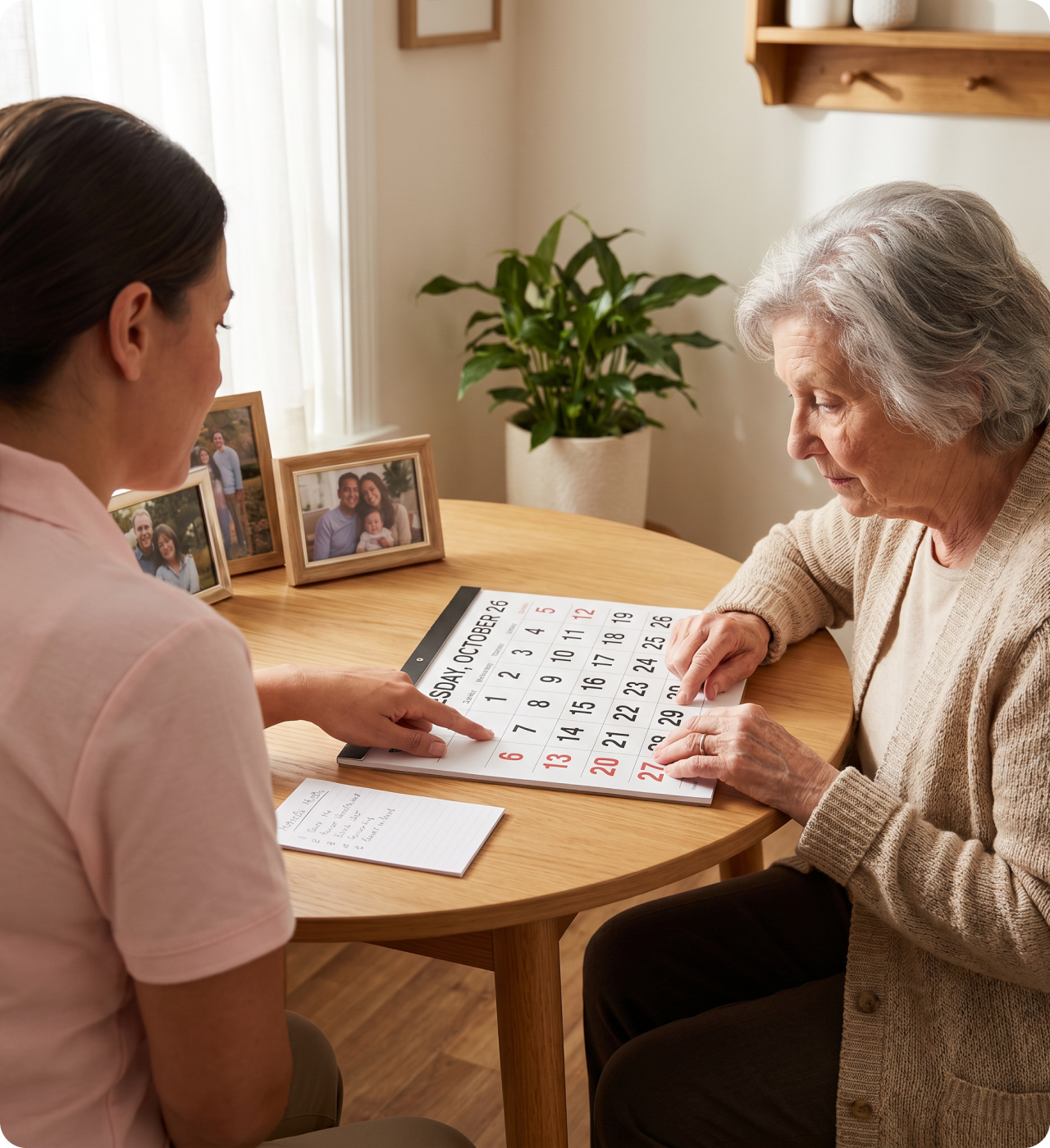
Memory loss is only one aspect of Alzheimer’s and dementia. As cognitive decline progresses, individuals may experience behavioral and psychological changes that require thoughtful supervision and support.
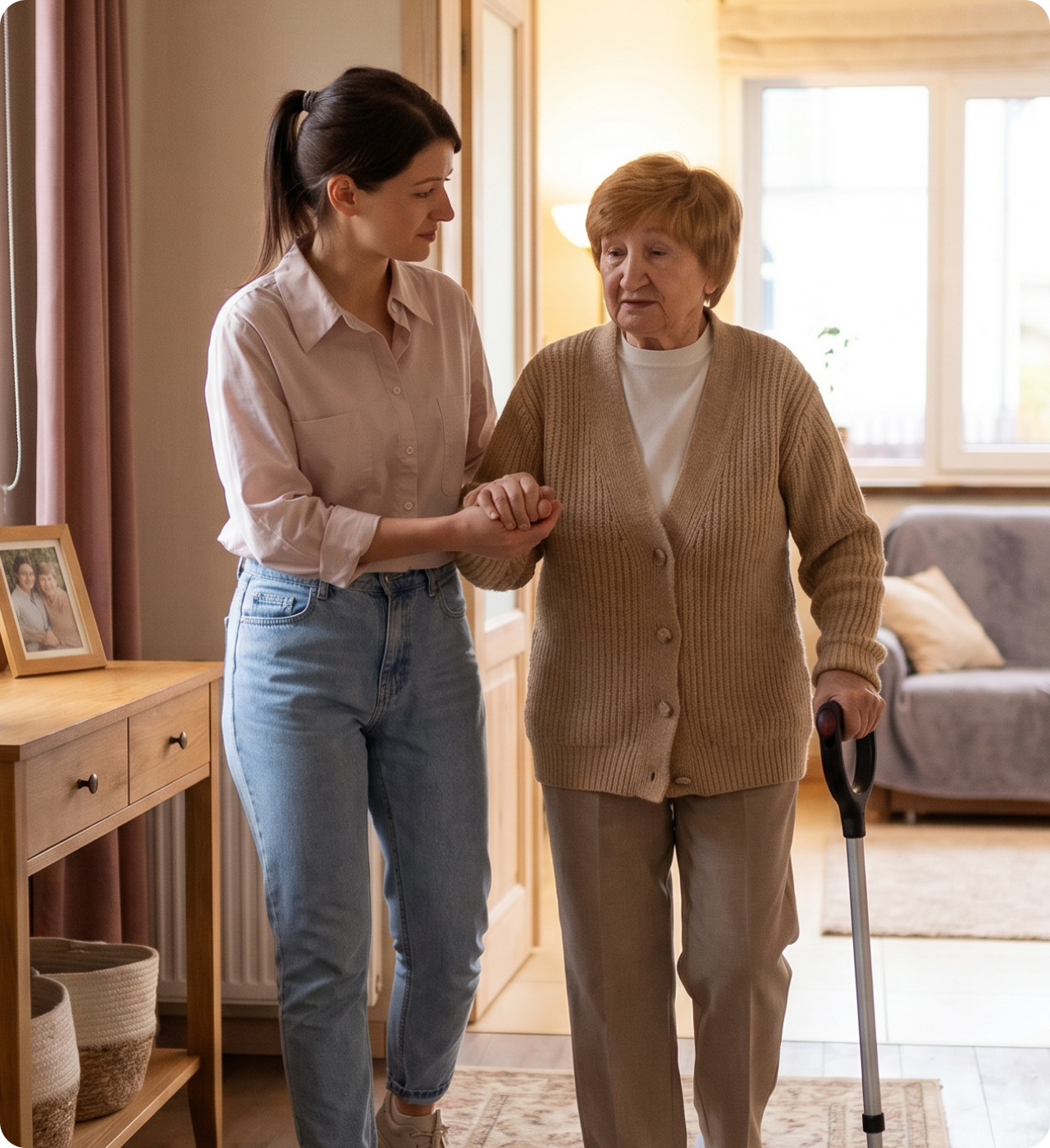
Many families face challenges such as wandering, confusion about time or place, repetitive questioning, disrupted sleep patterns, and periods of agitation or anxiety. Some individuals may struggle with changes in mood, resistance to care, or difficulty communicating their needs clearly.
Our caregivers are trained to respond calmly and consistently to these behaviors using proven communication techniques, structured routines, and a reassuring presence. By maintaining familiar surroundings and predictable daily patterns, we help reduce triggers that can lead to frustration or distress while promoting a greater sense of security.
Alzheimer’s disease and other forms of dementia progress in stages, each bringing unique challenges that require different levels of support. Understanding these stages allows families to prepare and ensure their loved one receives appropriate care as needs evolve.
Early-Stage Dementia:
During the early stages, individuals may experience mild memory lapses, difficulty finding words, or subtle changes in reasoning and judgment. At this point, support often focuses on reminders, structured routines, transportation assistance, and help with planning daily activities while preserving independence.
Middle-Stage Dementia:
As cognitive decline progresses, symptoms may include increased confusion, wandering, sleep disturbances, personality changes, and difficulty with personal care. Care during this stage typically requires more hands-on assistance, consistent supervision, and strategies designed to reduce agitation and anxiety.
Late-Stage Dementia:
In the advanced stages, individuals may lose the ability to communicate clearly, recognize loved ones, or perform basic tasks independently. Care becomes more comprehensive, with a strong focus on safety, comfort, dignity, and maintaining a calm environment.
Because dementia is progressive, care needs change over time. Our caregivers adapt alongside your loved one’s condition, ensuring that support remains appropriate, structured, and responsive at every stage.
We deliver in-home Alzheimer’s and dementia care with a focus on safety, routine, and dignity. Because symptoms and needs can change over time, our care plans are designed to be flexible and responsive while maintaining consistent daily structure.

Personalized support and daily structure
We help with day-to-day tasks while maintaining familiar routines that reduce stress and confusion. Care is tailored to each client’s abilities, preferences, and stage of cognitive change.

Safety-first supervision
Our caregivers assist with fall prevention, wandering risk reduction, and maintaining a safe home environment. We also provide oversight and reassurance during times of increased confusion or anxiety.

Engagement that supports well-being
We incorporate simple, appropriate activities that encourage connection and stimulation—such as conversation, light mental exercises, music, and familiar hobbies—based on what your loved one enjoys and can comfortably participate in.

Family communication and continuity
We coordinate with families to keep care consistent and informed, and we communicate changes in routine, behavior, or daily needs so families are never left guessing.